|
| Becak's lined up outside the Novotel Jogjakarta |
Yesterday was a full and long day. We finished the day with a fantastic dinner at
Gadjah Wong before heading back to the hotel and, for me, straight to bed.
 |
| colored light statues outside the Novotel Jogjakarta |
 |
| colored light statues outside the Novotel Jogjakarta |
 |
| Becak Drivers waiting for fares, Jogjakarta |
Today was another early start. It began with a fantastic buffet at the
Novotel Jogjakarta. Then we were headed to
Borobudur. This is a 9th century Buddhist monument. If you watch The Amazing Race you may remember this year it was a featured race stop for Jogjakarta.
 |
| A family of 4 making their way around town, Jogjakarta |
 |
| Waiting for the light to turn green, Jogjakarta |
Today the Adventures Abroad itinerary read:
From Yogyakarta we drive
north to the largest stupa-style Buddhist monument in the world -- Borobudur.
This incredible monument, built and decorated before AD 800, should be on
anybody's list of the ten greatest art-complexes in the world for its size,
quality, sophistication and excellent state of preservation.
Borobudur
was built in three tiers: a pyramidal base with five concentric square terraces,
the trunk of a cone with three circular platforms and, at the top, a monumental
stupa. The walls and balustrades are decorated with fine low reliefs, covering a
total surface area of 2500 sq m. Around the circular platforms are 72 openwork
stupas, each containing a statue of the Buddha. The monument was restored with
UNESCO's help in the 1970s.
After a guided site tour, we return to
Yogyakarta. Your afternoon is free. Wandering in the narrow streets of the
markets you will see many beautiful crafts for sale, including the famous wayang
wooden and leather puppets, but especially the batik. Yogyakarta is famous for
its batik.
Overnight in Yogyakarta. Meal plan: Breakfast and
dinner.
 |
| This was a former town completely decimated by the Mount Merapi Volcano |
On the way to Borobudur we stopped at what looked like a road side excavation. It turned out to be a former town that had been completely decimated by a 2006 earthquake and the 2010 eruption of Mount Merapi.
From Wikipedia:
On 27 May 2006, a 6.3 magnitude earthquake struck
roughly 50 km (31 mi) southwest of Merapi, killing at least 5,000 and leaving at
least 200,000 people homeless in the Yogyakarta region, heightening fears that Merapi
would "blow". The quake did not
appear to be a long-period oscillation, a seismic disturbance class that is
increasingly associated with major volcanic eruptions. A further 11,000
villagers were evacuated on 6 June as lava and superheated clouds of gas poured
repeatedly down its upper slopes towards Kaliadem, a location that was located
southeast of Mt. Merapi. The pyroclastic
flows are known locally as "wedhus gembel" (Javanese for "shaggy goat"). There
were two fatalities as the result of the eruption.
It was very sad to stop and see this. It was disheartening to know that this is now a "tourist" site that has people (like myself) actually stopping to take a picture. There was even a little hut with a women selling DVD's of the recent event.
From Wikipedia:
After a period of multiple eruptions considered to exceed the intensity and
duration of those in 1872 on 10
November 2010 the intensity and frequency of eruptions was noticed to
subside. By this time 153
people had been reported to have been killed and 320,000 were displaced. Later the eruptive
activities again increased requiring a continuation of the Level 4 alert and
continued provision of exclusion zones around the volcano. By 18 November the death toll had increased to 275. The toll had risen to 324 by 24 November and Syamsul Maarif, head of the
National Disaster Mitigation Agency (BNPB) explained that the death toll had
risen after a number of victims succumbed to severe burns and more bodies were
found on the volcano’s slopes.
In the aftermath of the more intensive eruptive activities in late November
Yogyakarta’s Disaster Management Agency reported that there were about 500
reported cases of eruption survivors in Sleman district suffering from minor to
severe psychological problems, and about 300 cases in Magelang. By
3 December the death toll had risen to 353.
 |
Borobudur
Jogjakarta, Java, Indonesia |
 |
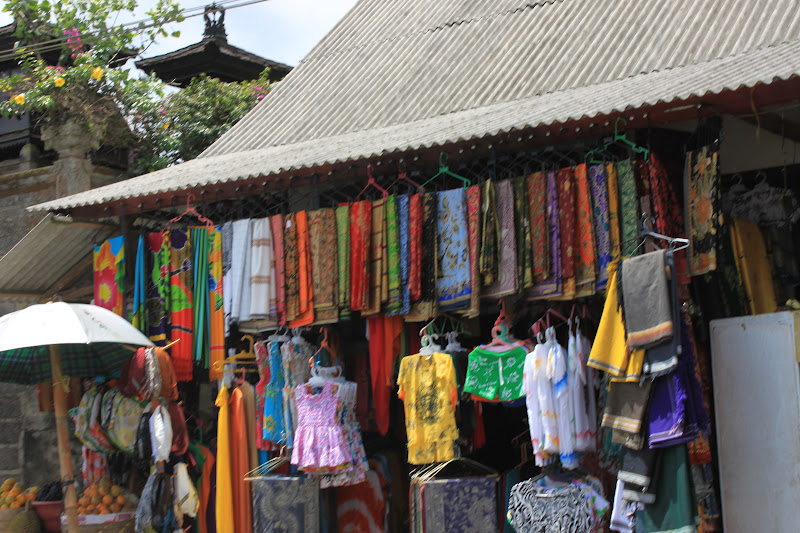
Market stalls
Borobudur
Jogjakarta, Java, Indonesia |
 |
market stalls
Borobudur
Jogjakarta, Java, Indonesia |
 |
Borobudur
Jogjakarta, Java, Indonesia |
 |
Borobudur
Jogjakarta, Java, Indonesia |
 |
Borobudur
Jogjakarta, Java, Indonesia |
 |
Borobudur
Jogjakarta, Java, Indonesia |
Borobudur is a pilgrimage site and a temple to Lord Buddha. The temple itself is comprised of 6 rectangle platforms and 3 circular levels. It contains 2672 relief panels and 504 statues of Buddha. The top three circular levels are topped by a giant dome. This dome is surrounded by 72 stupas containing statues of Buddha.
 |
Sexy Me -- LOL ;)
Borobudur
Jogjakarta, Java, Indonesia |
When entering Borobudur you are given a sarong to wear if you don't already have one. It is mandatory to wear it while visiting Borobudur.
 |
Borobudur
Jogjakarta, Java, Indonesia |
The day was extremely hot. So much in fact that I "rented" an umbrella for 1000 IDR.
 |
Borobudur
Jogjakarta, Java, Indonesia |
 |
Borobudur
Jogjakarta, Java, Indonesia |
This is the view from the bottom of Borobudur out towards the park grounds.
 |
Borobudur
Jogjakarta, Java, Indonesia |
Continuing up the steps to Borobudur. According to Wikipedia, the steps to pilgrimage are:
The journey for pilgrims begins at the base of the monument and follows a path
circumambulating the
monument while ascending to the top through the three levels of Buddhist
cosmology, namely Kāmadhātu (the world of desire), Rupadhatu (the world of forms)
and Arupadhatu
(the world of formlessness). During the journey, the monument guides the
pilgrims through a system of stairways and corridors with 1,460 narrative relief
panels on the walls and the balustrades
 |
Borobudur
Jogjakarta, Java, Indonesia |
.
 |
Borobudur
Jogjakarta, Java, Indonesia |
 |
Borobudur
Jogjakarta, Java, Indonesia |
 |
Borobudur
Jogjakarta, Java, Indonesia |
 |
Borobudur
Jogjakarta, Java, Indonesia |
 |
Borobudur
Jogjakarta, Java, Indonesia |
Seriously, isn't it beautiful? The work is amazing, the size and grandeur and intricacy of it all.
 |
Borobudur
Jogjakarta, Java, Indonesia |
 |
Borobudur
Jogjakarta, Java, Indonesia |
Notice again that some of the hands and heads have been removed. Mostly due to stealing.
 |
Borobudur
Jogjakarta, Java, Indonesia |
One of the 2672 reliefs on Borobudur.
 |
Borobudur
Jogjakarta, Java, Indonesia |
The stairs on Borobudur are very steep. Over twelve inches each they make you take quite a hike. Age wouldn't be a problem in going up or down but a hip or leg condition may impede you.
 |
Borobudur
Jogjakarta, Java, Indonesia |
 |
Borobudur
Jogjakarta, Java, Indonesia |
 |
Borobudur
Jogjakarta, Java, Indonesia |
 |
Borobudur
Jogjakarta, Java, Indonesia |
Again. just more amazingness !! Is that even a word? I could/would have visited this place everyday, forever. While we were exploring we ran into quite a few students who were learning english. In order to "prove" they had done their assignments, they asked us several questions and then we posed for photos with them. It kinda made me feel like a celebrity with a papparazzi following.
 |
Borobudur
Jogjakarta, Java, Indonesia |
 |
Borobudur
Jogjakarta, Java, Indonesia |
 |
Borobudur
Jogjakarta, Java, Indonesia |
 |
Borobudur
Jogjakarta, Java, Indonesia |
Looking down the steps of one level. Quite steep, non?
 |
Borobudur
Jogjakarta, Java, Indonesia |
 |
Borobudur
Jogjakarta, Java, Indonesia |
 |
Borobudur
Jogjakarta, Java, Indonesia |
These are the perforated stupas on the top levels of Borobudur. Each stupa has a statue of Buddha instead. It is forbidden to climb on or each in, or open up a stupa. I did have to break this rule though. While the guards weren't looking I reached in and patted the knee or hand of several Buddha's. I did this because of my sister. She is currently battling a very aggressive form of small cell carcinoma (cancer) and I figured that more help I have in the prayer department, the better.
 |
Borobudur
Jogjakarta, Java, Indonesia |
 |
Borobudur
Jogjakarta, Java, Indonesia |
 |
Borobudur
Jogjakarta, Java, Indonesia |
 |
Borobudur
Jogjakarta, Java, Indonesia |
 |
Borobudur
Jogjakarta, Java, Indonesia |
 |
Borobudur
Jogjakarta, Java, Indonesia |
 |
Borobudur
Jogjakarta, Java, Indonesia |
 |
Borobudur
Jogjakarta, Java, Indonesia |
 |
Borobudur
Jogjakarta, Java, Indonesia |
 |
sexy me ;)
Borobudur
Jogjakarta, Java, Indonesia |
From Wikipedia:
In
Indonesian, ancient temples are known as
candi;
thus "Borobudur Temple" is locally known as
Candi Borobudur. The term
candi is also used more loosely to describe any ancient structure, for
example gates and bathing structures. The origins of the name Borobudur
however are unclear, although
the original names of most ancient Indonesian temples are no longer known. The name
Borobudur was first written in Sir Thomas Raffles' book on Javan
history. Raffles
wrote about a monument called borobudur, but there are no older documents
suggesting the same name. The only
old Javanese manuscript
that hints at the monument as a holy Buddhist sanctuary is Nagarakretagama, written
by Mpu Prapanca in
1365.
The name Bore-Budur, and thus BoroBudur, is thought to have
been written by Raffles in English grammar to mean the nearby village of Bore;
most candi are named after a nearby village. If it followed Javanese language,
the monument should have been named 'BudurBoro'. Raffles also suggested that
'Budur' might correspond to the modern Javanese word Buda ("ancient") –
i.e., "ancient Boro". However,
another archaeologist suggests the second component of the name (Budur)
comes from Javanese term bhudhara (mountain).
 |
Borobudur
Jogjakarta, Java, Indonesia |
 |
Borobudur
Jogjakarta, Java, Indonesia |
Seriously so beautiful. You can see how high we are from the view. Fantastic !! I know I am overdosing you on this particular site, but it was such a highlight for me. So incredible I can't even put it into words. If I, as a Roman Catholic feel this way, can you imagine what this does to people who make the pilgrimage?
 |
Borobudur
Jogjakarta, Java, Indonesia |
From Wikipedia:
Evidence suggests Borobudur was abandoned following the 14th-century decline of
Buddhist and Hindu kingdoms in Java, and the Javanese conversion to
Islam. Worldwide
knowledge of its existence was sparked in 1814 by Sir
Thomas Stamford Raffles, then the British ruler of Java, who was advised of
its location by native Indonesians. Borobudur has since been preserved through
several restorations. The largest restoration project was undertaken between
1975 and 1982 by the Indonesian government and UNESCO, following which the monument was
listed as a UNESCO World Heritage Site. Borobudur
is still used for pilgrimage; once a year Buddhists in Indonesia celebrate Vesak at the monument, and
Borobudur is Indonesia's single most visited tourist attraction
 |
Borobudur
Jogjakarta, Java, Indonesia |
 |
Borobudur
Jogjakarta, Java, Indonesia |
Is he winking at me?
 |
Borobudur
Jogjakarta, Java, Indonesia |
 |
Borobudur
Jogjakarta, Java, Indonesia |
 |
Borobudur
Jogjakarta, Java, Indonesia |
 |
Borobudur
Jogjakarta, Java, Indonesia |
 |
Borobudur
Jogjakarta, Java, Indonesia |
 |
Borobudur
Jogjakarta, Java, Indonesia |
 |
Borobudur
Jogjakarta, Java, Indonesia |
 |
Borobudur
Jogjakarta, Java, Indonesia |
I took this photo because it was too funny. The "coolness" factor with the flip flops and cigarette are killer ;)
 |
Borobudur
Jogjakarta, Java, Indonesia |
Again, another photo of things to behold. I love the matching hats ;)
 |
Borobudur
Jogjakarta, Java, Indonesia |
 |
Borobudur
Jogjakarta, Java, Indonesia |
 |
Borobudur
Jogjakarta, Java, Indonesia |
Can you spot the lady in the photo?
If you would love to visit Borobudur
Quote code AANK for a special discount.
 |
| Top Stupa at Borobudur |